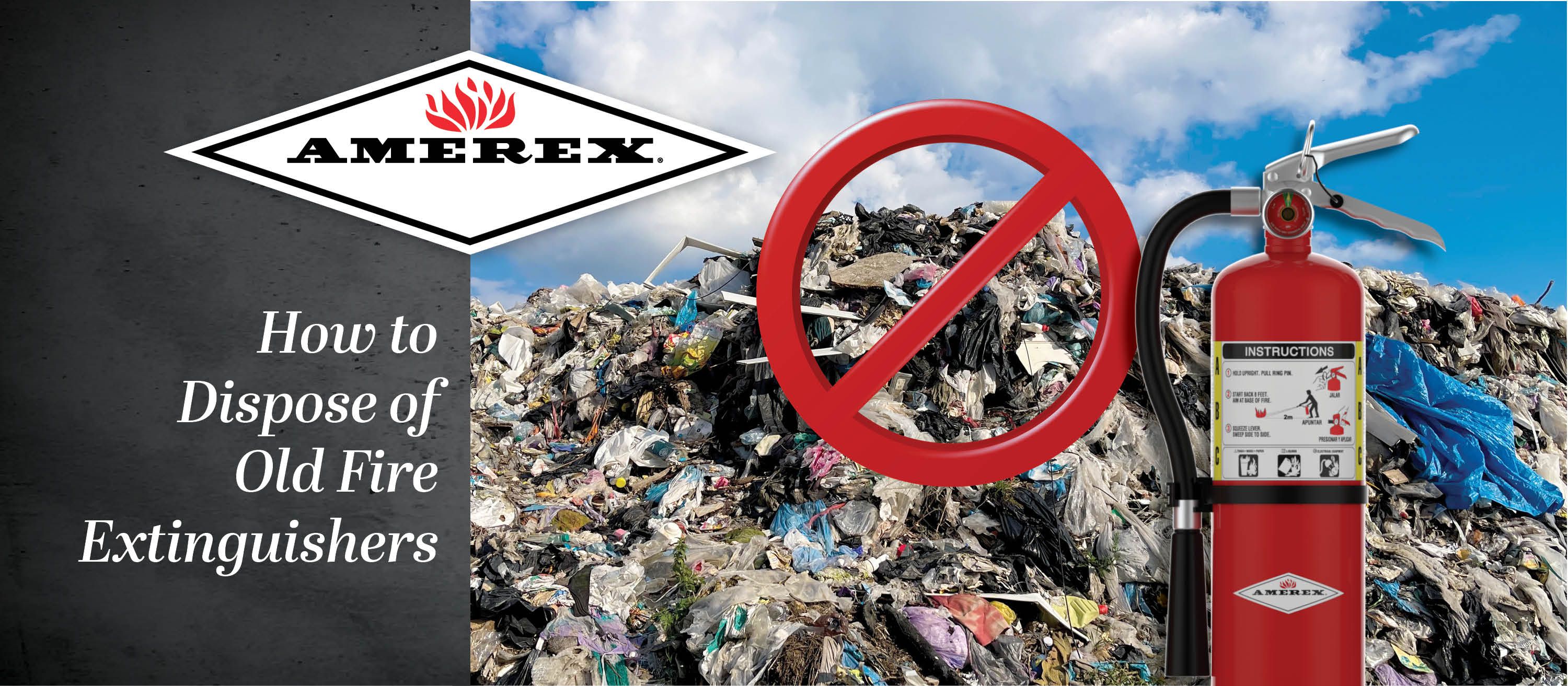
How to Dispose of Old Fire Extinguishers
Fire extinguishers protect people and property for years, but what happens after they're removed from service matters too. Improper disposal is drawing regulatory attention, and distributors are best positioned to get ahead of it.
The short answer: Commercial fire extinguishers should be handled by a fire equipment distributor, not dropped at a household hazardous waste (HHW) site. Distributors can build disposal into the sale price, recover value through training, repair, and recycling, and return clean agent units through programs like the Amerex Halotron® Recovery & Recycling Program.
Have an old extinguisher at your business or facility? Contact your local fire equipment distributor. Amerex extinguishers are labeled for industrial or nonresidential use, and distributors are equipped to take them back.
This post covers why disposal matters, how to price it, how to offset its cost, and how to work with local waste facilities, followed by answers to common questions.
Why Proper Disposal Matters
Without strong distributor programs, the public often drops old extinguishers at HHW facilities. That's not where Amerex extinguishers belong. They're built and labeled for commercial settings, and household waste programs aren't equipped to handle them.
Several states and local governments now have Extended Producer Responsibility (EPR) laws or ordinances that aim to shift disposal costs to manufacturers when products end up at HHW sites. Los Angeles County and Vermont both include fire extinguishers, and Vermont officials pointed to large quantities of extinguishers coming through household hazardous waste programs.
If the industry doesn't manage end-of-life for commercial extinguishers, state and local governments will.
Build Disposal Into Every Sale
Disposal is labor-intensive, and letting condemned units pile up before searching for the cheapest way out rarely works. The most successful recycling programs start at the point of sale, with disposal costs factored into the price of the replacement unit. Ask yourself:
- Do you charge a disposal fee when an extinguisher is removed from service?
- Is it a flat fee, or does it reflect each extinguisher's type and size?
Offset End-of-Life Costs
Some labor costs are unavoidable, but these strategies can help recover them:
- Training: If a unit still holds pressure and its handle and valve work, use it for hands-on training where local regulations allow. That empties the cylinder in a constructive, billable way.
- Repair: A unit that can be repaired and returned to service has no disposal cost.
- Recycling: Extinguishers are generally made of recyclable steel, aluminum, rubber, and plastic. Set up bins for each, plus a drum for discharged dry chemical, so technicians can break units down the same day.
- Promotion: Advertise your disposal and recycling services, paired with discounts on new extinguishers, to drive sales while covering costs.
For clean agent units, the Amerex Halotron® Recovery & Recycling Program, offered with American Pacific Corporation (APC) and A-Gas, provides an environmentally responsible option. Participants who collect 10 or more Halotron and Halotron BrX® extinguishers are compensated based on the agent recovered and its market value.
Work With Local Waste Facilities
Waste facility staff may not know what extinguishing agents are or how to handle them. Before delivering extinguishers or spent agent:
- Confirm what each landfill, transfer station, and scrap recycler accepts.
- Provide Safety Data Sheets for every agent you deliver.
- Make sure cylinders are depressurized and disassembled before recycling.
Staying Ahead
Disposal requirements vary by location and can change, so verify local regulations and revisit your disposal arrangements regularly. By planning for disposal at the sale and recovering value wherever possible, distributors can protect their margins and help keep commercial extinguishers out of the household waste stream.
A fire extinguisher's job isn't finished until it's disposed of properly.
Frequently Asked Questions
Distributors and their customers often have the same questions about what to do with extinguishers at end of life. Here are quick answers to the most common ones.
Can you throw away a commercial fire extinguisher?
No. Commercial fire extinguishers shouldn't go in the trash or to a household hazardous waste site. Return them to a fire equipment distributor, who can depressurize, disassemble, and recycle them.
Are fire extinguishers recyclable?
Yes. Fire extinguishers are generally made of recyclable steel, aluminum, rubber, and plastic. Cylinders must be depressurized and disassembled before recycling.
Can old fire extinguishers be used for training?
Yes, where local regulations allow. A unit that still holds pressure and has a working handle and valve can be discharged during hands-on training, which empties it before disposal.
Do any states regulate fire extinguisher disposal?
Yes. Several states and local governments have Extended Producer Responsibility (EPR) laws or ordinances, and Los Angeles County and Vermont both include fire extinguishers. Requirements vary, so check the rules where you operate.
What happens to Halotron fire extinguishers at end of life?
Halotron and Halotron BrX® extinguishers can be returned through the Amerex Halotron® Recovery & Recycling Program, offered with APC and A-Gas. Distributors who collect 10 or more units are compensated based on the agent recovered and its market value.
Learn more here.